
INITIAL SITUATION – OFFSHORE STRUCTURE UNDER PRESSURE FROM GROWTH AND REGULATION
An internationally active tech company had organized its business activities over the years within a classic offshore structure. Development, IP, and operational functions were distributed across various jurisdictions – with the primary goal of achieving tax efficiency.
What worked for a long time, however, became increasingly difficult to maintain as the company grew and regulatory requirements intensified. Banks scrutinized the existing structure with growing skepticism, payment flows became more complex, and expectations around substance, governance, and transparency rose noticeably.
At the same time, the company was in a dynamic growth phase and was actively pursuing acquisitions in various markets. The existing structure, however, was neither operationally nor regulatorily robust enough to support this. In particular, there was no clear foundation for efficiently integrating new business units while simultaneously meeting the rising demands of authorities, banks, and business partners.
THE REAL CRUX OF THE MATTER – A STRUCTURE THAT KEEPS PACE WITH THE BUSINESS MODEL'S DYNAMICS
It quickly became clear that this could not simply be about relocating activities. What was needed was a structure that would not only withstand regulatory scrutiny, but also keep pace with a dynamic business model. The key question was how new business units and acquired companies could be efficiently integrated – without having to reconsider the structure from scratch each time.

OUR APPROACH – TRANSITIONING TO AN ONSHORE STRUCTURE THAT GROWS WITH THE COMPANY
We set up the project together with management and the operational teams – with the clear goal of developing a future-proof and scalable structure.
At the center was not only the transition to an onshore structure, but the question of how value creation, functions, and responsibilities could be clearly and sustainably mapped.
The various business units were analyzed and purposefully transferred into a new structure – with entities in Liechtenstein and Switzerland corresponding to their respective functions.
In parallel, the necessary legal and tax foundations were established, governance structures were built, and the requirements around substance and documentation were consistently implemented.
A particular focus was placed on practical feasibility: clear processes were defined that allow new business units to be efficiently integrated into the existing structure – without adding unnecessary complexity.
WHAT HAS ACTUALLY CHANGED – STABILITY AND FLEXIBILITY IN EQUAL MEASURE
Today, the company has a structure that is both regulatorily robust and operationally sustainable.
Cooperation with banks functions smoothly again, and transactions can be processed transparently and efficiently.
At the same time, the new structure provides the flexibility needed to support continued growth and to integrate new acquisitions in a structured manner.

Or, as a member of the management team put it:
 Today we have a structure that holds up under regulatory scrutiny and at the same time offers the flexibility we need for our continued growth.
Key Facts at a Glance:
- Transformation from an offshore setup to a modern onshore structure
- Establishment of entities in Liechtenstein and Switzerland
- Improved bankability and operational processing of transactions
- Structure as a foundation for continued growth and acquisitions
- Clear processes for the efficient integration of new business units
ABOUT THE AUTHOR
The transformation of international corporate structures requires a deep understanding of tax, legal, and operational interdependencies.
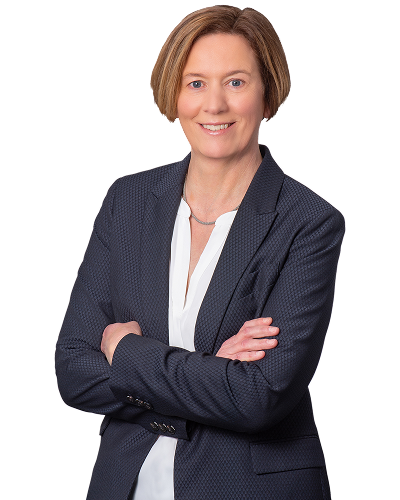
As a former Head of Tax at a publicly listed company, Priska Rösli has accompanied such processes first-hand – from structuring international activities to coordination with management, the board of directors, and external stakeholders.
When transitioning from offshore to onshore structures, it is critical that not only the tax concept is sound, but that topics such as governance, substance, and bankability are considered from the outset. The correct embedding within the Swiss and Liechtenstein legal systems plays a central role in this.
Her goal is to implement such projects holistically – with solutions that hold up under regulatory scrutiny, function in day-to-day operations, and grow alongside the company.