


INITIAL SITUATION – SERVICE PROVIDER EXPANDS UNCOORDINATED FROM LIECHTENSTEIN INTO SWITZERLAND
A Liechtenstein-based service company with a local owner had gradually expanded its business activities into Switzerland. Through several Swiss entities, various locations were established where local teams provided services directly to clients.
At the same time, management and consulting services continued to be provided through the Liechtenstein entity. The entrepreneur was deeply involved in the group’s development both strategically and operationally.
As growth accelerated, the question arose as to how services between the Liechtenstein and Swiss entities could be correctly charged for tax purposes – in particular without creating undesirable income tax risks or uncertainty regarding the tax recognition of the structure.
THE REAL CRUX OF THE MATTER – WITHOUT STRUCTURAL ADJUSTMENTS, TAX DISADVANTAGES LOOM
In the course of the analysis, it became clear that the primary issue was not simply ensuring that the ongoing intercompany charges were properly structured – but rather that the ownership structure and profit repatriation needed to be carefully planned.
It became apparent, in particular, that the existing shareholding structure could create long-term tax disadvantages – especially with regard to future profit distributions from Switzerland and the treatment of existing Swiss retained earnings.
Without adjusting the structure, there was a risk that distributions would be subject to Swiss withholding tax or could only be repatriated efficiently with additional administrative effort.
For corporate groups with activities in both Liechtenstein and Switzerland, it is critical that operational functions, intercompany services, and shareholding structures are aligned as a whole.

OUR APPROACH – ALIGNING OPERATIONAL REALITY AND TAX STRUCTURE THROUGH A NEW HOLDING COMPANY
Together with the entrepreneur, we first analyzed the existing functions, responsibilities, and service relationships within the group.
The central question was how the management and consulting services provided by the Liechtenstein entity to the Swiss entities could be structured in a way that was tax-transparent, arm’s-length, and sustainable in the long term.
In parallel, we further developed the shareholding structure to make future profit flows more tax-efficient.
The solution was to contribute the Swiss entity into the Liechtenstein entity, thereby creating a new holding structure that also reflected the group’s actual economic operations. This allowed both existing reserves and future profits to be structured and optimized from a Liechtenstein withholding tax perspective.
A key component of the project was also obtaining binding agreements with the relevant tax authorities in both countries.
Tax rulings were secured from both the Swiss Federal Tax Administration and the Liechtenstein tax authority, providing binding clarification on the restructuring, the intercompany service charges, and the treatment of existing Swiss retained earnings.
WHAT HAS ACTUALLY CHANGED – FUTURE DISTRIBUTIONS AND PROFIT FLOWS NOW TAX-OPTIMIZED
Today, the company has a structure that reflects the operational reality of the group while being robust from a tax standpoint.
The intercompany services between Liechtenstein and Switzerland are clearly governed and bindingly agreed upon. At the same time, the new holding structure enables future distributions and profit flows to be handled significantly more efficiently.
By adapting the structure at an early stage, potential tax risks were addressed in a timely manner and the foundation for continued growth was established.

Or, as the entrepreneur put it:
 What mattered most to us was not just that the ongoing intercompany charges were properly structured, but that the structure works in the long run. That’s exactly the certainty we have today.
Key Facts at a Glance:
- Structuring of an expansion from Liechtenstein into Switzerland already underway
- Analysis and regulation of internal management and consulting services
- Avoidance of income tax risks in cross-border service relationships
- Implementation of a new holding structure
- Optimization of the future withholding tax position and treatment of existing Swiss retained earnings
- Binding legal certainty secured through rulings with the Swiss Federal Tax Administration (ESTV) and the Liechtenstein tax authority
ABOUT THE AUTHOR
Structuring corporate groups between Liechtenstein and Switzerland requires a deep understanding of operational processes, tax interdependencies, and practical implementation in day-to-day business.
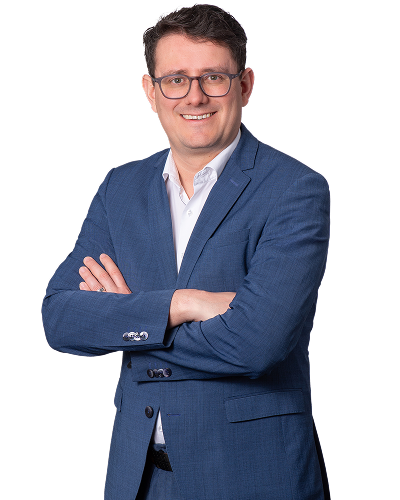
Michael Abegg has been advising companies for many years on expansions, restructurings, and the tax coordination of cross-border activities between Switzerland and Liechtenstein.
A particular focus lies on connecting operational reality with tax structure – especially in the areas of intercompany service relationships, shareholding structures, and the early identification of risks related to Swiss withholding tax.
His goal is to develop solutions that are not only convincing from a tax perspective, but also sustainable in the long term, legally sound, and practically implementable.
MICHAEL ABEGG Partner & Managing Director
 New technologies are transforming business models faster than tax law can respond. We analyze innovative business models in the fintech and blockchain sectors, bring tax clarity to dynamic structures, and minimize uncertainty – so that innovative ideas can be put into practice.