

On 5 and 6 November 2026, the annual Liechtenstein Tax Conference took place at the Rathaussaal in Vaduz. Organised by Exchange Ideas, the conference brought together professionals from Liechtenstein, Switzerland, Germany, Austria and other countries to discuss current tax developments and their implications for Liechtenstein asset structures.
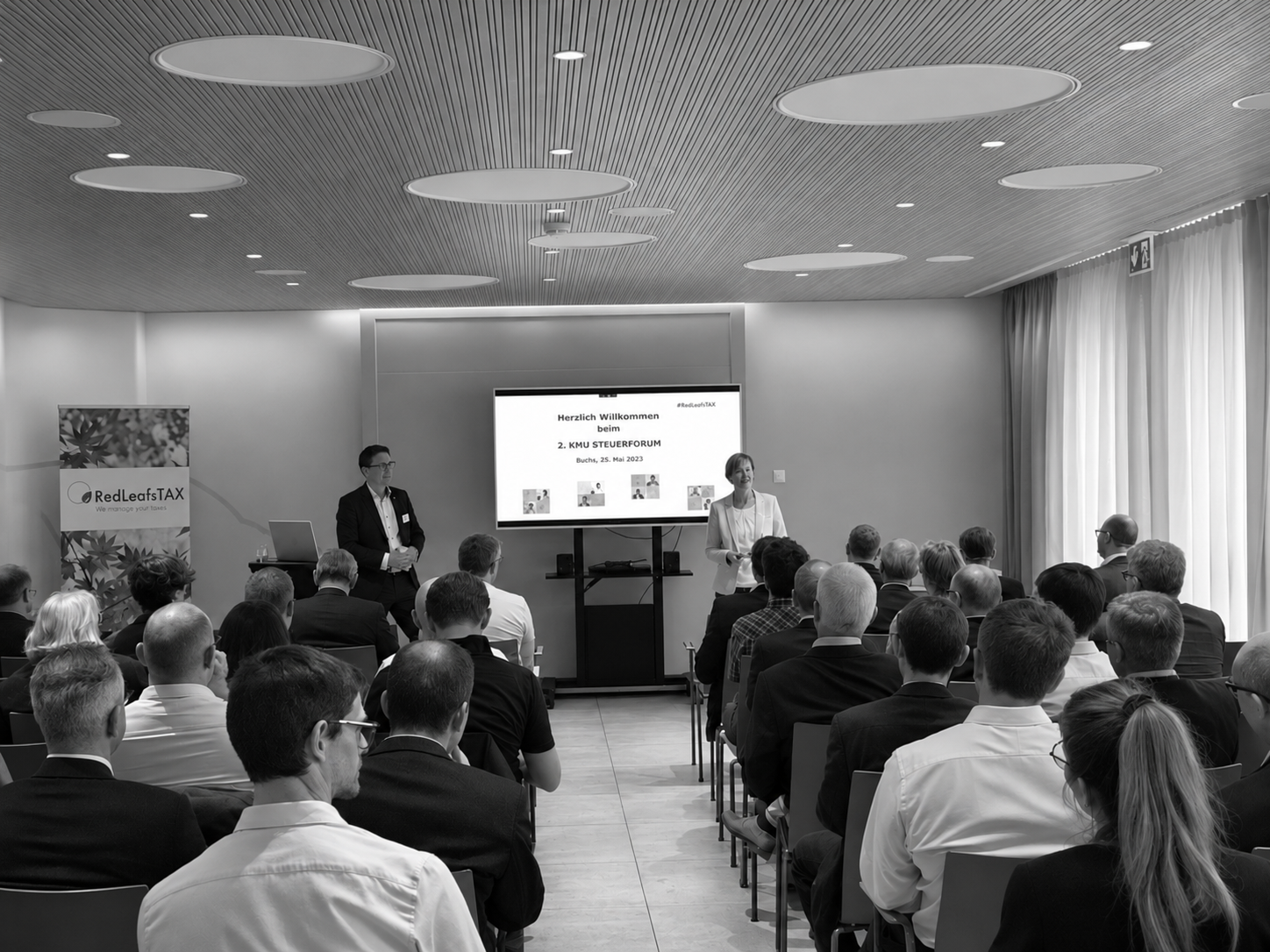
The conference opened with a focus on recent changes to Liechtenstein tax law, including the real estate capital gains tax, revocable asset structures and restructurings between Liechtenstein and Switzerland. Over the two days, the programme covered a broad range of topics, from the reform of Liechtenstein trust law, Pillar Two and the taxation of Liechtenstein trusts to estate and real estate structures, the Swiss securities transfer tax, private label funds and the use of artificial intelligence in tax practice. Global mobility and international changes of residence were also on the agenda.
Red Leafs Tax contributed its own technical presentation: Michael Abegg, Partner at Red Leafs Tax, spoke together with Oliver-Christoph Günther (LeitnerLaw Rechtsanwälte) on the Austrian interest deduction ban and its consequences for Liechtenstein structures. The two speakers first outlined the legal framework and documentation requirements, then examined the topic in depth through concrete case studies illustrating the planning options available in practice.
Key Observations
- Since 2026, Austria has applied a low-taxation threshold of 15%. With Liechtenstein’s corporate tax rate at 12.5%, interest paid to Liechtenstein group entities is therefore generally excluded from deduction.
- The rule affects holding and financing companies as well as non-transparent family foundations that grant loans to Austrian group companies.
- The Austrian Federal Finance Court (BFG) has ruled that the interest deduction ban violates the freedom of establishment and permits the deduction where the interest is at arm’s length and there is no abuse. A decision by the Supreme Administrative Court (VwGH) is still pending.
- Anyone converting a receivable into equity by way of a debt waiver should bear in mind that Liechtenstein and Austria treat this step differently for tax purposes.
Conclusion
For Liechtenstein asset structures holding interests in Austria, the interest deduction ban is no longer a theoretical risk as of 2026. Until the Supreme Administrative Court has ruled, we recommend carefully documenting the arm’s length nature and the business rationale of any financing arrangement and keeping affected tax assessments open. Whether a conversion into equity makes sense can only be assessed on a cross-border basis, as Liechtenstein and Austria treat the individual steps differently for tax purposes.
More on the Liechtenstein Tax Conference 2026 can be found here.